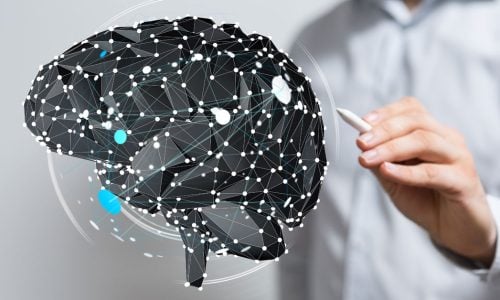
Attention is needed to focus and assists us in performing almost every daily task. See how HappyNeuron Pro's divided attention activities can help your patients today.
Since we rely on attention to perform nearly all of our daily tasks, it only makes sense to help boost your skills through our scientifically developed attention training tools.
Our capacity to concentrate is highly dependent on changes to our environment and within ourselves (noise, stress, worries, tiredness, disruptive thoughts, etc.). Shifting attention can be made voluntarily (for instance searching or focusing on something) or automatically (for example a sudden noise may draw our attention). Our training provides numerous attention tasks that will help you improve upon all these different aspects and develop strong concentration abilities.
What do attention skills help us with?
Attention skills enable us to focus on the work at hand, learn and understand both written and oral information, and think about a given subject. Strong attentional capacities may be required in order to concentrate on something in an extremely noisy environment, like an open plan office setting. We can also divide our attention between several activities. For instance, we can drive while having a conversation with a passenger. But when attention is divided between several tasks, it requires more brain resources. Aging is correlated with a decrease in attention resources and a higher sensitivity to interference, which results in people being less efficient with age on multiple simultaneous tasks.
Attention is also necessary for learning new concepts. Think about it: in order to learn anything, we have to pay attention to what experts or teachers tell us, or concentrate our attention to read a book so that the information and new knowledge can be memorized. Without attention, we could never memorize or master new material!
How can Happy Neuron Pro help?
Have you ever found it difficult to remain focused during a long speech or presentation, or to solve a problem when there was too much going on around you? We’ve all been there. No one is able to stay perfectly focused for long periods of time – it’s physically impossible. However, while you may not be able to help falling asleep in the middle of a boring opera, it is possible to improve your attention and your ability to focus – and HappyNeuron Pro can show you how to do it. Like any other mental skill, such as memorization or mental math, you can increase your ability to focus and to pay attention if you work on these skills. That is precisely what you will find in the HappyNeuron Pro program: a variety of exercises and alternating attention tasks, each with multiple difficulty levels scientifically designed to stimulate your attention and ability to focus.
Professional Tips
To fully benefit from these exercises, medical administrators should recommend finding a nice, quiet place to complete the training so patients can devote their full attention. Have your patients take their time with these exercises, and avoid doing them all in one sitting! If any of your patients start to feel their focus drift significantly, have them stop and do something else before returning to them later. Trying to forge ahead when the mind is tired doesn’t help brain cells in any way.